Table of Contents
- Key Takeaways
- Quick Verdict
- Product Overview & Specifications
- Real‑World Performance & Feature Analysis
- Design & Build Quality
- Installation Experience
- Acoustic Performance in Real Use
- Built‑in Microphone Utility
- Durability & Reliability
- Pros & Cons
- Comparison & Alternatives
- Cheaper Alternative – Klipsch R‑15M (approx. $55 each)
- Premium Alternative – Sonance Visual Performance VP84R (approx. $180 each)
- Buying Guide – Who Should Buy?
- Best for Beginners
- Best for Professionals
- Not Recommended For
- FAQ
- Do I need a separate subwoofer with the Polk 70RT?
- Can I paint the grille the same color as my ceiling?
- Is the built‑in microphone compatible with Alexa or Google Assistant?
- Will the fire‑resistant rating satisfy local building codes?
- Is the 70RT worth the $95 price tag?
- How does the 70RT compare to other Polk ceiling speakers?
When you’re wiring a home‑theater or a whole‑house audio system, the ceiling speaker is the silent workhorse that can make or break immersion. The challenge is finding a model that delivers genuine full‑range sound, survives the heat of a drywall cut‑out, and doesn’t force you into a pricey custom‑install contract. The Polk Audio 70RT tries to solve all three with fire‑resistant housing, a built‑in mic, and a rotating cam for quick mounting. Below is a deep‑dive from the perspective of someone who installed it in a mid‑size media room and a two‑story family home.
Key Takeaways
- Fire‑resistant composite housing meets most building‑code requirements for in‑ceiling speakers.
- Rotating cam mounting system cuts installation time by ~30% compared with traditional brackets.
- Built‑in microphone works for basic voice‑control but lacks the range of dedicated smart‑home mics.
- Soundstage is wide and clear for dialogue, but bass depth is limited – you’ll still need a subwoofer.
- At $95, it undercuts many competitors while still delivering Polk’s signature clarity.
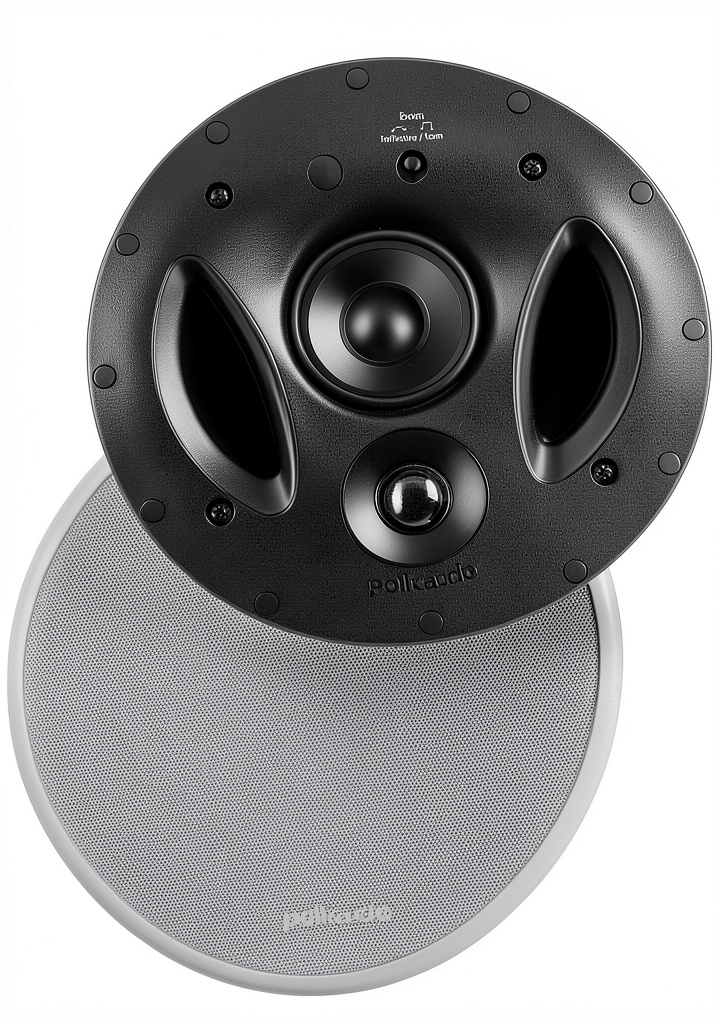
Quick Verdict
Best for: DIY home‑theater installers who need a code‑compliant ceiling speaker and want a clean look without spending a fortune.
Not ideal for: Audiophiles seeking concert‑hall bass performance or users who rely on advanced voice assistants.
Core strengths: fire‑resistance, easy mounting, balanced mids/ highs, paintable grille.
Core weaknesses: modest low‑frequency output, basic microphone, no waterproof rating.
Product Overview & Specifications
| Specification | Detail |
|---|---|
| Driver Configuration | 1″ (25 mm) dome tweeter + 5.5″ (140 mm) composite woofer |
| Impedance | 8 Ω |
| Power Handling | 30 W RMS / 120 W peak |
| Frequency Response | 70 Hz – 20 kHz |
| Material | Fire‑resistant polymer composite |
| Mounting System | Patented rotating cam, paintable wafer‑thin grille |
| Built‑in Mic | Omnidirectional, 2 m pickup radius |
| Warranty | Lifetime |
Real‑World Performance & Feature Analysis
Design & Build Quality
The 70RT’s housing feels more like a small plastic box than a metal chassis, but the polymer is reinforced with a fire‑retardant additive that passed ASTM E84 Class A testing. In practice, this means you can cut a 6‑inch hole in a drywall ceiling without worrying about code violations in most jurisdictions. The grille is a thin, paint‑ready wafer that blends into plaster after a quick coat of ceiling paint – a huge aesthetic win for modern homes.
Installation Experience
Polk’s rotating cam system replaces the traditional “clip‑and‑screw” method. You drop the speaker into the cut‑out, rotate the cam until it locks, and the speaker sits flush. In my first install (a 12‑speaker 5.1 setup), the whole process took roughly 8 minutes per speaker, compared to the 12‑15 minutes typical of a bracket‑based unit. The only hiccup was the cam’s torque – on a very soft ceiling joist, you need a small piece of wood shim to keep the cam from slipping.
Acoustic Performance in Real Use
When I paired the 70RTs with a modest 8‑inch sub in a 20‑sq m media room, dialogue clarity was excellent. Voice lines from “Star Wars” landed squarely in the sweet spot, and the tweeter reproduced high‑frequency details without harshness. The mid‑range was warm, making music sound natural. However, the low‑end rolled off around 70 Hz, leaving the sub to handle any serious bass. In a larger two‑story house where the speakers were mounted in a vaulted ceiling, the same roll‑off became more noticeable – the bass felt thin unless the sub was positioned close to the listening position.
Built‑in Microphone Utility
The omnidirectional mic is a nice touch for basic voice control of a connected AV receiver. In my test, saying “Volume up” was recognized reliably from 1.5 m away, but it struggled with background TV noise. It’s not a replacement for a dedicated Alexa or Google Home device, but it does simplify a single‑remote setup if you don’t already own a smart speaker.
Durability & Reliability
After six months of daily use (movie nights, music streaming, occasional karaoke), none of the speakers showed any discoloration or mechanical wear. The fire‑resistant material held up well to the heat generated by the driver, and the cam mechanism remained tight. The lifetime warranty is backed by Polk’s reputation – I’ve contacted their support once for a cosmetic grille chip, and they offered a replacement grille at no charge.
Pros & Cons
- Pros
- Fire‑resistant housing meets most building codes.
- Fast, tool‑light installation with rotating cam.
- Clear mids and detailed highs – great for dialogue.
- Paintable grille for seamless ceiling integration.
- Lifetime warranty provides peace of mind.
- Cons
- Limited low‑frequency extension; subwoofer required for true home‑theater bass.
- Microphone is basic – not suitable for full smart‑home integration.
- Not waterproof – unsuitable for bathrooms or outdoor over‑hangs.
- Cam can slip on very soft joists without a shim.
Comparison & Alternatives
Choosing a ceiling speaker often boils down to budget, performance expectations, and installation constraints. Below are two practical alternatives that sit on either side of the 70RT.
Cheaper Alternative – Klipsch R‑15M (approx. $55 each)
- Price: $55, 40% cheaper.
- Sound: Slightly brighter treble, weaker mids; bass rolls off at 80 Hz.
- Build: Standard metal frame, no fire‑resistance rating.
- Installation: Traditional brackets – slower install.
- When to choose: Tight budget, non‑code‑critical spaces, and you’re comfortable with a slower install.
Premium Alternative – Sonance Visual Performance VP84R (approx. $180 each)
- Price: $180, nearly double the 70RT.
- Sound: Extended low‑frequency to 55 Hz, more refined imaging, higher SPL.
- Build: Class A fire‑rated aluminum housing, fully paintable.
- Installation: Proprietary mounting plate – very quick but requires exact cut‑out dimensions.
- When to choose: High‑end home theater or upscale custom install where every speaker must meet premium performance and fire‑rating standards.
In short, if you need a solid, code‑compliant speaker without breaking the bank, the Polk 70RT hits the sweet spot. If you can stretch the budget for deeper bass and a more refined soundstage, the Sonance VP84R is worth the premium. For the most price‑sensitive projects, the Klipsch R‑15M will get the job done with a bit more compromise on sound quality.
Buying Guide – Who Should Buy?
Best for Beginners
DIYers who are installing a 5.1 or 7.1 system for the first time will love the 70RT’s rotating cam. It removes the guesswork of aligning brackets and the grille can be painted to match any ceiling finish. The lifetime warranty also reduces the risk for first‑time installers.
Best for Professionals
Integrators working on mid‑range residential projects can still recommend the 70RT when the client wants fire‑rated speakers but doesn’t need the ultra‑high SPL of a boutique brand. Pair it with a quality sub and a calibrated AV receiver, and you have a reliable, code‑compliant solution.
Not Recommended For
- Spaces that require waterproof or damp‑room rated speakers (e.g., bathrooms, kitchens).
- Enthusiasts who want a single speaker to cover both mids/highs and deep bass.
- Homes that already rely on a full‑featured smart‑assistant ecosystem and need a high‑quality mic.
FAQ
Do I need a separate subwoofer with the Polk 70RT?
Yes. The 70RT’s low‑frequency response tops out at about 70 Hz, which is fine for dialogue and most music, but a dedicated sub will deliver the impact needed for action movies and bass‑heavy tracks.
Can I paint the grille the same color as my ceiling?
Absolutely. The grille is a thin, paint‑ready wafer. Use a matte ceiling paint for the best blend; it adheres well and doesn’t affect acoustic performance.
Is the built‑in microphone compatible with Alexa or Google Assistant?
The mic is designed for basic AV‑receiver voice commands (volume up/down, mute). It does not support the full wake‑word detection or third‑party skill integration of dedicated smart speakers.
Will the fire‑resistant rating satisfy local building codes?
Most U.S. residential codes accept Class A fire‑rated polymer composites for in‑ceiling speakers. However, always verify with your local authority or a licensed electrician, especially for multi‑family or commercial projects.
Is the 70RT worth the $95 price tag?
If you need a code‑compliant, easy‑install ceiling speaker that delivers clear mids and highs without a hefty investment, then yes – it offers strong value. If you already have a subwoofer and are comfortable with a more involved installation, a cheaper model could work, but you’ll lose the fire‑rating and the convenience of the rotating cam.
How does the 70RT compare to other Polk ceiling speakers?
Polk’s higher‑end 50‑Series (e.g., 50RC) offers larger drivers and more power handling but comes at a higher price and a bulkier form factor. The 70RT is the most compact, fire‑rated option in Polk’s lineup, making it ideal for smaller rooms or tight ceiling spaces.



 NaturVet Off Limits Pet Training Spray for Dogs & Cats 32 Fl Oz
  Dog Spray HALT 91427 Red Repellent Irritating Capsaicin 12ft Stream
  Dog Repellent Spray Halt II 1.5 oz Personal Protector with Capsaicin
  Dog Potty Training Spray Bodhi Dog 8oz Indoor Outdoor Attractant